Empowering Dyspraxia/DCD Voices & Raising Awareness
Dyspraxia Magazine is the only publication dedicated to dyspraxia/DCD. By sharing the voices of the Dyspraxic community and helping to promote and share research, the future looks a little bit brighter. Here you will also find resources, research links that you can participate in, and most importantly, honest stories direct from our community.
What is Dyspraxia/DCD?
Within diagnostic manuals, dyspraxia is officially referred to as DCD (developmental coordination disorder) and is categorised as a neurodevelopmental disorder. Neurodevelopmental disorders such as dyspraxia first arise in childhood and typically persist into adulthood. While symptoms persist into adulthood, it is classified as a neurodevelopmental disorder because symptoms first present during early childhood. Dyspraxia is categorised by the following:
- A significant delay in the acquisition of gross and fine motor skills
- Impairment in the execution of coordinated motor skills
Inclusion is at the heart of Dyspraxia Magazine
-
"Nothing About Us Without Us"
You have most likely heard this saying before. A lot of companies use this phrase to give credit to having at least one person involved in the decision-making who identifies with the people the decisions are being made for. That could be one person out of 100 others who don't, and so their voice is a mere echo. At Dyspraxia Magazine, 100% of decisions are made by dyspraxic people and is dyspraxic owned. We stay true to "Nothing About Us Without Us".
-
Information Is Power
Collaborating with researchers, occupational therapists and researchers is key. With the rise of social media platforms and AI tools making it easier for well-intentioned advocates to raise awareness, the sharing of misinformation has never been more prominent and harmful. We do our best to ensure everything we share is fact-checked to the original source. Even highly respected websites, including the NHS website, have been known to share misinformation sometimes.
-
Small & Mighty
Dyspraxia Magazine is a small, multi-neurodivergent, queer woman-owned magazine. At first glance, it may seem like there is a big team backed by funding and more. Alas! Dyspraxia Magazine is run entirely by ONE person. From time to time, volunteers will support running bigger projects and will occasionally help with smaller, more frequent tasks. All volunteers are part of a panel that helps make decisions and bring new ideas. All of whom are dyspraxic themselves.
Help us spread awareness, contribute your story, or collaborate on projects that make a difference.
Get In Touch
Whether you are a researcher, educator or someone with lived experience, your voice matters, and your story could change another's life and make a big difference.
If you provide a service or sell a product that would be beneficial to the dyspraxia/DCD or wider neurodivergent community, then get in touch to ask about our advertising opportunities.
Articles
View all-
The Forgotten Disability
Despite being a lifelong disability affecting more than one million Australians and five per cent of the total population, DCD has always been hidden from the public discourse. DCD -...
The Forgotten Disability
Despite being a lifelong disability affecting more than one million Australians and five per cent of the total population, DCD has always been hidden from the public discourse. DCD -...
-
Largest survey of its kind in the UK invites 10...
UK charity Designability has launched a major survey calling on 10,000 disabled people across the UK to take part. The Unfair Index: Designing a Fairer Future gives disabled people the...
Largest survey of its kind in the UK invites 10...
UK charity Designability has launched a major survey calling on 10,000 disabled people across the UK to take part. The Unfair Index: Designing a Fairer Future gives disabled people the...
-
Guardians of Hope Launches Free IEP/504 Parent ...
Guide Helps Families Navigate Special Education Process with Confidence
Guardians of Hope Launches Free IEP/504 Parent ...
Guide Helps Families Navigate Special Education Process with Confidence
-
Bulat Utemuratov Foundation and RAOUL Charity F...
The Bulat Utemuratov Foundation and RAOUL Charity Foundation have launched a new supported employment program aimed at developing a structured pathway into the workforce for young people with autism in...
Bulat Utemuratov Foundation and RAOUL Charity F...
The Bulat Utemuratov Foundation and RAOUL Charity Foundation have launched a new supported employment program aimed at developing a structured pathway into the workforce for young people with autism in...
Quick Facts/Myth Busting
-
Diagnosis under 5
Dyspraxia is usually diagnosed after the age of 5 to allow children the opportunity to learn movement-based skills and to allow time to rule out other underlying causes. This can often be paired with the support of an Occupational Therapist to monitor their ability to learn these new skills.
-
Comorbities
While dyspraxia is distinct from other conditions, dyspraxia is often present with other Neurodivergent conditions such as autism, ADHD, dyslexia and more. This is commonly seen across all neurodivergent conditions and should not be confused with them all being the same; they are not.
-
Gender Bias
Boys are more likely to receive a dyspraxia/(DCD diagnosis; however, it is just as common in girls as it is in boys. This is thought to be due to societal gendered expectations for coordination and spatial awareness. Always did a campaign on this social bias called "like a girl".
-
Dyspraxia is lifelong
There is a common misconception that dyspraxia can be grown out of. This is not the case and there is no credible research to suggest this. There are known instances when a child is misdiagnosed due to "lack of opportunities to gain skills" or due to another underlying cause.
Browse The Shop
-
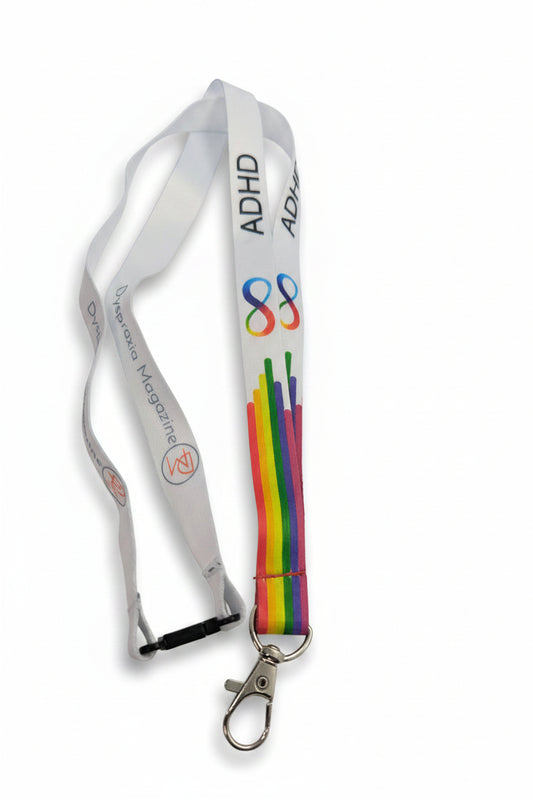
ADHD Awareness Card
Regular price £3.00 GBPRegular priceSale price £3.00 GBP -
Sold out -
Autism Awareness Card
Regular price £3.00 GBPRegular priceSale price £3.00 GBP -
Sold out -
Clear card wallet
Regular price £0.50 GBPRegular priceSale price £0.50 GBP -
Diabetes Awareness Card
Regular price £3.50 GBPRegular priceSale price £3.50 GBP